Lisbon Lemon Tree Secrets: How to Prune, Feed and Harvest Like a Pro
Published: 30 Oct 2025
Introduction: Why Lisbon Lemon Trees Deserve Expert Care
Lisbon lemon trees are prized for their vigorous growth, fragrant blossoms and juicy fruit. They thrive in warm climates and produce lemons year-round when cared for properly. However, many gardeners struggle with pruning, feeding and harvesting. Because of this, yields may be reduced and tree health may decline.
To grow Lisbon lemon trees like a pro, each care step must be understood and applied correctly. From shaping the canopy to feeding the roots and timing the harvest, every detail matters. Therefore, this guide reveals the secrets behind successful Lisbon lemon tree care.
High-volume keywords such as Lisbon lemon tree care, how to prune Lisbon lemon tree, Lisbon lemon fertilizer schedule, and when to harvest Lisbon lemons are used throughout this article. These terms improve search visibility and provide actionable insights for gardeners.
Step 1: How to Prune Lisbon Lemon Trees
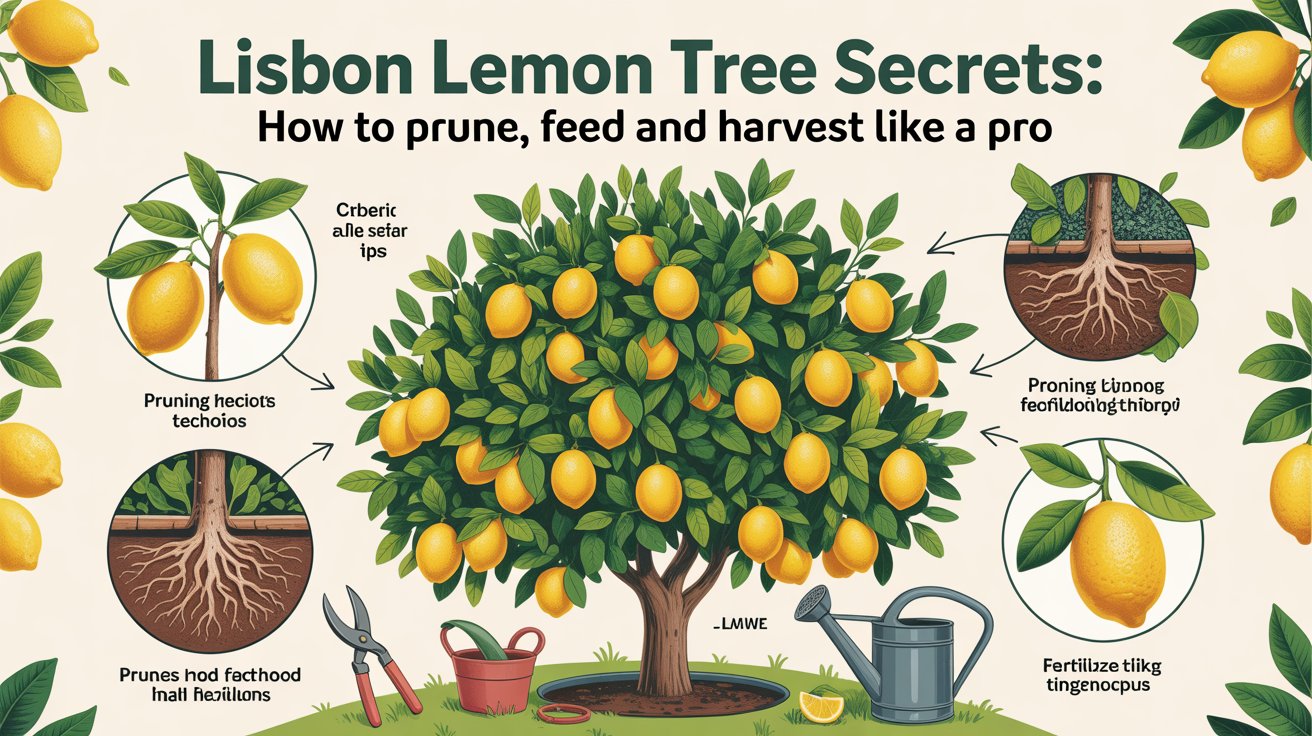
Pruning is essential for shaping Lisbon lemon trees and improving fruit production. It allows sunlight to reach inner branches and reduces disease risk. Although pruning may seem intimidating, it becomes easy with the right approach.
- Pruning should be done in late winter or early spring before new growth begins. Dead, damaged or crossing branches must be removed first. This improves airflow and prevents fungal infections. Suckers growing from the base should also be cut away.
- To shape the canopy, branches should be thinned rather than shortened. This encourages outward growth and prevents overcrowding. A balanced structure supports heavy fruit without breaking limbs.
- Although pruning reduces foliage temporarily, it strengthens the tree long-term. Sharp tools and clean cuts ensure quick healing. Because Lisbon lemon trees grow vigorously, annual pruning is recommended.

Step 2: Feeding Lisbon Lemon Trees for Maximum Yield
Feeding is the foundation of healthy growth and abundant fruiting. Lisbon lemon trees require a balanced diet of nitrogen, phosphorus and potassium. Micronutrients like magnesium and iron also support leaf color and fruit quality.
- Fertilizer should be applied every 4 to 6 weeks during the growing season. Slow-release citrus blends are ideal. Organic options like compost and worm castings improve soil structure and microbial activity.
- Although nitrogen promotes leafy growth, excess may reduce flowering. Therefore, phosphorus-rich formulas are used during bloom periods. Potassium strengthens roots and enhances fruit flavor.
- Watering must accompany feeding. Dry soil reduces nutrient uptake. Mulch helps retain moisture and regulate temperature. Because feeding affects every stage of growth, consistency is key.
Lisbon lemon trees bloom multiple times a year. Their white flowers are fragrant and attract pollinators. However, poor nutrition or stress may reduce flowering. Therefore, care must be adjusted during bloom periods.
- Phosphorus-rich fertilizer supports flower development. Watering should be increased slightly. Stress from drought or overwatering must be avoided. Flowers are sensitive and may drop prematurely if conditions are unstable.
- Pollination occurs naturally outdoors. Bees and hoverflies transfer pollen between flowers. Indoor trees may require manual pollination using a soft brush. This ensures fruit set and improves yield.
- Although not all flowers produce fruit, healthy trees bloom abundantly. Monitoring blossom health and supporting pollination improves harvest quality. Because flowering is a transition stage, care must be precise.
Step 4: Fruit Development and Care
After successful pollination, Lisbon lemon trees begin forming fruit. Small green lemons appear at the base of flowers and slowly increase in size. This stage requires consistent care because fruit development is sensitive to stress.
- Watering should be deep and regular. Soil must remain moist but not soggy. Mulch helps retain moisture and regulate temperature. Fertilizer should be adjusted to support fruit growth. A balanced citrus blend with potassium improves flavor and firmness.
- Although fruit may take several months to mature, patience is essential. Stress from drought or nutrient imbalance may cause premature fruit drop. Monitoring for pests like aphids and scale is also important. Organic sprays and neem oil help protect developing fruit.
- Because Lisbon lemons grow vigorously, branch support may be needed. Stakes or ties prevent bending and breakage. This ensures fruit reaches full size without damage.

Step 5: Harvesting Lisbon Lemons Like a Pro
Harvesting is the final reward for proper care. Lisbon lemons ripen to a bright yellow color and develop a firm texture. They should be picked when fully colored and slightly soft to the touch.
- Harvesting should be done in the morning when temperatures are cooler. Lemons may be clipped using pruners or twisted gently by hand. Care must be taken not to damage the branch or surrounding fruit.
- Although Lisbon lemons ripen on the tree, some varieties continue maturing after picking. Storage in a cool place extends shelf life. Refrigeration helps preserve flavor and juiciness.
- Frequent harvesting encourages more blooms and fruit. Therefore, ripe lemons should be picked regularly. This prevents overcrowding and improves overall tree health.
- Because harvesting marks the end of the cycle, pruning and feeding may be reduced temporarily. The tree enters a rest phase before the next bloom.
Troubleshooting Lisbon Lemon Tree Problems
Even with proper care, Lisbon lemon trees may face challenges. Common issues include:
- Yellow Leaves: Often caused by nutrient deficiency or overwatering. Magnesium or iron supplements may help.
- Leaf Curl: Indicates water stress or pest damage. Adjust watering and inspect for insects.
- No Flowers: May result from excess nitrogen or poor light. Reduce fertilizer and increase sun exposure.
- Fruit Drop: Caused by drought, nutrient imbalance or pests. Maintain consistent care and monitor conditions.
- Slow Growth: Linked to compacted soil or rootbound containers. Repotting or soil amendment may be needed.
Although these problems seem serious, most are reversible. Early detection and proper care restore health and productivity.

FAQ: Lisbon Lemon Tree Care
Prune once a year in late winter or early spring. Remove dead, damaged and crossing branches.
Use a balanced citrus fertilizer with nitrogen, phosphorus and potassium. Apply every 4 to 6 weeks.
A: Harvest when lemons are fully yellow and slightly soft. Morning harvest preserves flavor and freshness.
This may indicate nutrient deficiency or overwatering. Check soil and adjust care accordingly.
Yes. Dwarf varieties thrive in pots. They need full sun, regular watering and proper feeding.
Stress from drought, poor nutrition or pests may cause premature fruit loss. Maintain consistent care.
Increase sunlight and reduce nitrogen. Use phosphorus-rich fertilizer to support blooms.
Yes. Outdoor trees rely on bees. Indoor trees may require manual pollination using a soft brush.
Final Thoughts: Lisbon Lemon Tree Mastery
Lisbon lemon trees offer beauty, fragrance and flavor. Their care requires attention to pruning, feeding and harvesting. By mastering each step, gardeners can enjoy healthy trees and abundant fruit.
From shaping the canopy to supporting blooms and timing the harvest, every detail matters. Monitoring light, water and nutrients ensures success. Whether grown in gardens or containers, Lisbon lemons thrive with expert care.
Use this guide to unlock the secrets of Lisbon lemon tree growth. With the right strategy, your tree will flourish and reward you with vibrant fruit season after season.



- Be Respectful
- Stay Relevant
- Stay Positive
- True Feedback
- Encourage Discussion
- Avoid Spamming
- No Fake News
- Don't Copy-Paste
- No Personal Attacks
- Be Respectful
- Stay Relevant
- Stay Positive
- True Feedback
- Encourage Discussion
- Avoid Spamming
- No Fake News
- Don't Copy-Paste
- No Personal Attacks
