Lemon Tree Life Cycle: Hidden Growth Stages Revealed
Published: 30 Oct 2025
Introduction: Why Understanding Lemon Tree Growth Matters
Lemon trees are among the most rewarding fruit trees to grow. Their glossy leaves, fragrant blossoms and vibrant fruit make them a favorite in home gardens and orchards. However, many gardeners overlook the subtle transitions that define the lemon tree life cycle. Because of this, growth problems often go unnoticed and yields may suffer.
To grow lemon trees successfully, each stage must be understood and supported. From seed germination to fruit ripening, every phase has unique requirements. Therefore, this guide reveals the hidden growth stages of lemon trees that most growers miss.
High-volume keywords such as lemon tree growth stages, lemon tree life cycle, how lemon trees grow, lemon tree care, and lemon tree fruiting timeline are used throughout this article. These terms improve search visibility and provide valuable insights for gardeners.
Stage 1: Seed Germination – The Silent Beginning
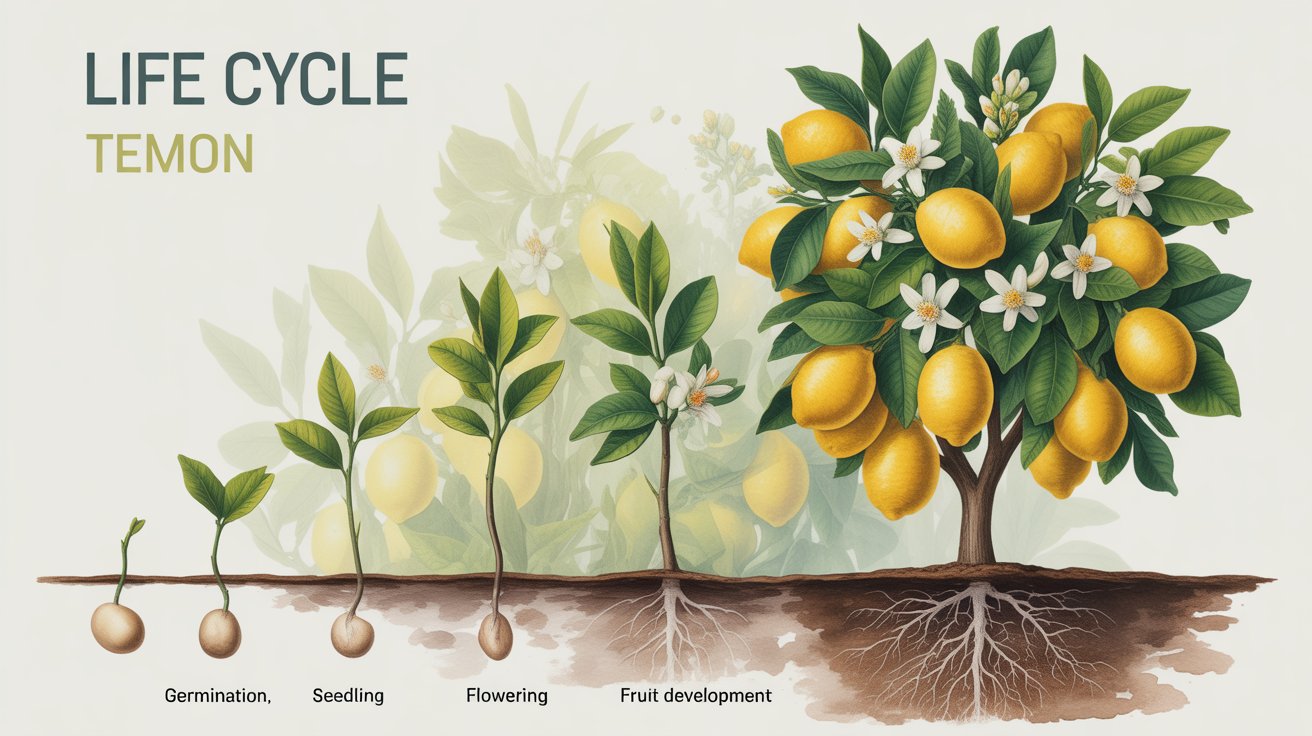
The lemon tree life cycle begins with seed germination. This stage transforms a dormant seed into a living plant. Although it appears simple, germination requires precise conditions. Warmth, moisture and oxygen must be present.
Seeds should be soaked for 24 hours before planting. This softens the seed coat and speeds up sprouting. A well-draining potting mix is recommended. Seeds should be planted ½ inch deep and kept in a warm location.

Germination usually occurs within 7 to 14 days. During this time, the seed absorbs water and activates enzymes. A tiny root (radicle) emerges first followed by a shoot. Because this stage sets the foundation, care must be consistent.
Although germination is often skipped by those buying saplings, it remains a vital part of the lemon tree growth process. Understanding this phase helps growers appreciate the tree’s journey from seed to fruit.
Stage 2: Seedling Development – Building the Framework
Once germinated, the lemon seed becomes a seedling. This stage involves root expansion and leaf formation. The seedling must be exposed to light for photosynthesis. A sunny windowsill or grow light is ideal.
- Watering should be moderate. Overwatering may cause root rot while underwatering stunts growth. Soil should remain moist but not soggy. Fertilizer is not needed until the seedling develops true leaves.
- True leaves differ from the initial seed leaves (cotyledons). They are glossy and oval-shaped. Once these appear, the seedling enters active growth. Transplanting may be done when roots fill the container.
- Although seedlings grow slowly, patience is required. This stage builds the structure for future fruiting. Therefore, attention to light and moisture is essential.
Stage 3: Vegetative Growth – Strengthening the Tree
Vegetative growth marks the transition from seedling to young tree. During this phase, the lemon tree develops branches, leaves and a stronger trunk. Growth accelerates and nutrient demand increases.
A balanced fertilizer may be applied every 4 to 6 weeks. Nitrogen supports leaf production while potassium strengthens roots. Organic compost also improves soil health and microbial activity.
Pruning may be introduced to shape the tree. Removing weak branches improves airflow and reduces disease risk. Stakes may be used to support the trunk if needed.
Although vegetative growth lasts several months, it is critical for future flowering. Trees must be exposed to full sun and protected from wind. Because this stage determines overall health, consistent care is required.
Stage 4: Flowering – The Transition to Fruiting
Flowering is one of the most exciting stages. Lemon trees produce fragrant white blossoms that attract pollinators. Flowers usually appear in the second or third year depending on conditions.
Pollination may occur naturally or be assisted manually. Bees and hoverflies transfer pollen between flowers. If grown indoors, a soft brush may be used to mimic this process.
Although not all flowers produce fruit, healthy trees bloom multiple times a year. Watering should be increased slightly during flowering. Fertilizer with higher phosphorus content supports bloom development.
Because flowers are sensitive to stress, temperature and humidity must be monitored. Dropping blossoms may indicate overwatering or nutrient imbalance. Therefore, careful observation is necessary.
Stage 5: Fruit Development – The Slow Transformation
After successful pollination, lemon trees begin forming fruit. Small green lemons appear at the base of flowers and slowly increase in size. This stage requires consistent care because fruit development is sensitive to stress.
Watering should be deep and regular. Soil must remain moist but not soggy. Mulch helps retain moisture and regulate temperature. Fertilizer should be adjusted to support fruit growth. A balanced citrus blend with potassium improves flavor and firmness.
Although fruit may take several months to mature, patience is essential. Stress from drought or nutrient imbalance may cause premature fruit drop. Monitoring for pests like aphids and scale is also important. Organic sprays and neem oil help protect developing fruit.
Because lemon trees grow vigorously, branch support may be needed. Stakes or ties prevent bending and breakage. This ensures fruit reaches full size without damage.

Stage 6: Ripening and Harvest – The Final Reward
Ripening is the final stage in the lemon tree life cycle. Lemons change from green to yellow as they mature. This process may take 6 to 9 months depending on variety and climate. Because ripening is gradual, color and firmness must be checked regularly.
Lemons should be harvested when fully yellow and slightly soft. A gentle twist or clip removes the fruit without damaging the branch. Morning harvest is preferred to preserve freshness.
Although lemons may ripen on the tree, some varieties continue ripening after picking. Storage in a cool place extends shelf life. Refrigeration is optional but helps maintain flavor.
Because ripening marks the end of the cycle, pruning and fertilization may be reduced temporarily. The tree enters a rest phase before the next bloom. With proper care, lemon trees produce fruit multiple times a year.
Even with proper care, lemon trees may face challenges. Common problems include:
- Yellowing Leaves: Often caused by nutrient deficiency or overwatering. Magnesium or iron supplements may help.
- Leaf Curl: Indicates water stress or pest damage. Adjust watering and inspect for insects.
- No Flowers: May result from excess nitrogen or poor light. Reduce fertilizer and increase sun exposure.
- Fruit Drop: Caused by drought, nutrient imbalance or pests. Maintain consistent care and monitor conditions.
- Slow Growth: Linked to compacted soil or rootbound containers. Repotting or soil amendment may be needed.
Although these problems seem serious, most are reversible. Early detection and proper care restore health and productivity.

FAQ: Lemon Tree Life Cycle
Most lemon trees produce fruit within 2 to 3 years. Grafted trees may fruit sooner.
Well-drained, slightly acidic soil with pH between 5.5 and 6.5 is ideal. Compost improves fertility.
Yes. Dwarf varieties thrive in containers. They need bright light and regular watering.
This may indicate nutrient deficiency or overwatering. Check soil and adjust care accordingly.
Water deeply once or twice a week. Soil should remain moist but not soggy.
Stress from drought, poor nutrition or pests may cause fruit to fall prematurely.
Yes. Pruning improves airflow and shape. Remove dead or crossing branches annually.
increase sunlight and reduce nitrogen. Use phosphorus-rich fertilizer to support blooms.
Final Thoughts: Unlocking the Lemon Tree Life Cycle
Lemon trees offer beauty, fragrance and flavor. Their growth stages, though often overlooked, are essential for success. By understanding each phase, gardeners can provide targeted care and enjoy abundant harvests.
From seed germination to fruit ripening, every step matters. Monitoring light, water and nutrients ensures healthy development. Whether grown in gardens or containers, lemon trees thrive with attention and patience.




- Be Respectful
- Stay Relevant
- Stay Positive
- True Feedback
- Encourage Discussion
- Avoid Spamming
- No Fake News
- Don't Copy-Paste
- No Personal Attacks
- Be Respectful
- Stay Relevant
- Stay Positive
- True Feedback
- Encourage Discussion
- Avoid Spamming
- No Fake News
- Don't Copy-Paste
- No Personal Attacks
