How Radishes Grow: A Step-by-Step Guide for Gardeners
Published: 30 Oct 2025
Introduction: Why Radishes Deserve a Spot in Your Garden
Radishes are among the fastest-growing vegetables in any garden. They are easy to plant, quick to harvest and ideal for beginners. Because of their short growing cycle, radishes allow gardeners to enjoy fresh produce within just a few weeks.
Although radishes are simple to grow, understanding their growth stages and care requirements is essential. When planted correctly, radishes can improve soil health and deter pests. Therefore, this guide will walk you through each step of the radish growing process.
To ensure maximum visibility, this article uses high-volume keywords such as how to grow radishes, radish planting guide, radish care tips, and radish growing stages. These terms are integrated naturally into the content to boost SEO performance.
Step 1: Choosing the Right Radish Variety
Before planting, the first decision involves selecting the right radish type. Radishes come in many shapes and colors. Some are round and red while others are long and white. Popular varieties include Cherry Belle, French Breakfast and Daikon.
- Each variety has different growing needs. For example, Daikon radishes require more space and time. On the other hand, Cherry Belle matures quickly and suits small gardens. Because of this, gardeners should match the variety to their climate and soil conditions.
- In addition, radish seeds should be purchased from reputable sources. Organic and heirloom seeds are preferred for better flavor and disease resistance. This step lays the foundation for successful growth.
Step 2: Preparing the Soil for Radishes
Radishes grow best in loose, well-drained soil. Heavy clay or compacted soil can cause misshapen roots. Therefore, soil should be tilled to a depth of 8 to 10 inches. Organic compost may be added to improve texture and fertility.
- Although radishes tolerate a range of soil types, they prefer a pH between 6.0 and 7.0. A soil test can be used to check pH levels. If the soil is too acidic, lime may be added. If it is too alkaline, sulfur can help balance it.
- Raised beds and containers are also suitable for radishes. These options allow better control over drainage and spacing. Because radishes are sensitive to overcrowding, proper soil preparation is crucial.
Step 3: Timing Your Planting
Radishes are cool-season crops. They grow best in spring and fall when temperatures range between 50°F and 70°F. If planted in hot weather, radishes may bolt and become bitter. Therefore, timing is key.
In most regions, radish seeds can be sown as soon as the soil is workable. This usually occurs in early spring. For fall planting, seeds should be sown six weeks before the first frost. Succession planting every 10 to 14 days ensures a continuous harvest.
Because radishes mature quickly, they are ideal for intercropping. They can be planted alongside slower-growing vegetables like carrots and onions. This strategy maximizes space and improves garden efficiency.
Step 4: Sowing Radish Seeds
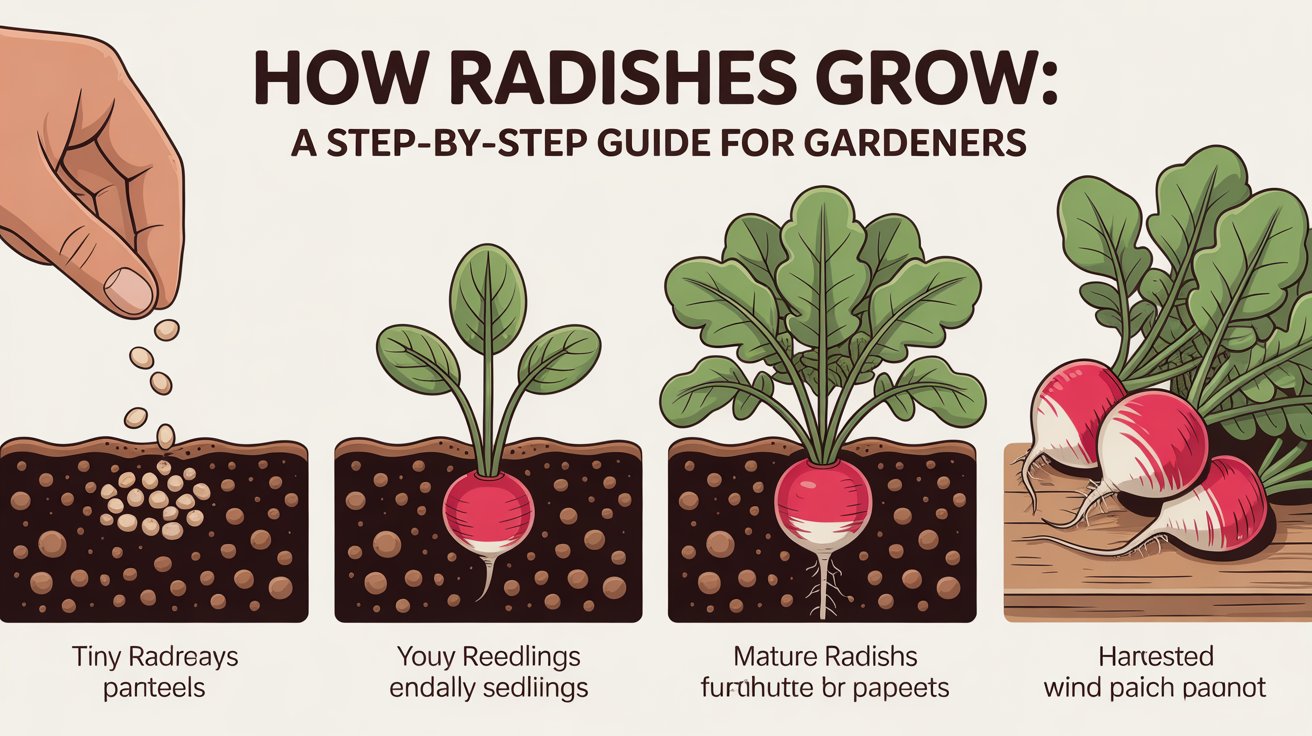
Radish seeds should be planted directly into the soil. Transplanting is not recommended because it disturbs root development. Seeds should be sown ½ inch deep and spaced 1 inch apart. Rows should be 12 inches apart to allow airflow.
- After sowing, the soil should be gently watered. Moisture helps seeds germinate within 4 to 7 days. Mulch may be added to retain moisture and suppress weeds. However, mulch should not cover the seeds directly.
- Thinning is necessary once seedlings emerge. Crowded radishes will not form proper roots. Therefore, seedlings should be thinned to 2 inches apart. This step ensures healthy growth and uniform size.
Step 5: Watering and Fertilizing Radishes
- Radishes require consistent moisture. Dry soil can lead to woody or cracked roots. On the other hand, overwatering may cause rot. Therefore, soil should be kept evenly moist but not soggy.
- An inch of water per week is usually sufficient. Rainfall can be supplemented with manual watering. Drip irrigation or soaker hoses are ideal because they deliver water directly to the roots.
- Fertilization should be minimal. Excess nitrogen promotes leafy growth but reduces root size. A balanced fertilizer with low nitrogen and higher phosphorus is recommended. Organic options like bone meal or compost tea work well.
Step 6: Managing Pests and Diseases
Although radishes are resilient, they are not immune to pests. Common threats include flea beetles, aphids and root maggots. These pests damage leaves and roots, reducing yield and quality.
To prevent infestations, row covers may be used. These barriers protect young plants without blocking sunlight. In addition, companion planting with marigolds or nasturtiums can deter pests naturally.
Step 7: Harvesting Radishes at the Right Time
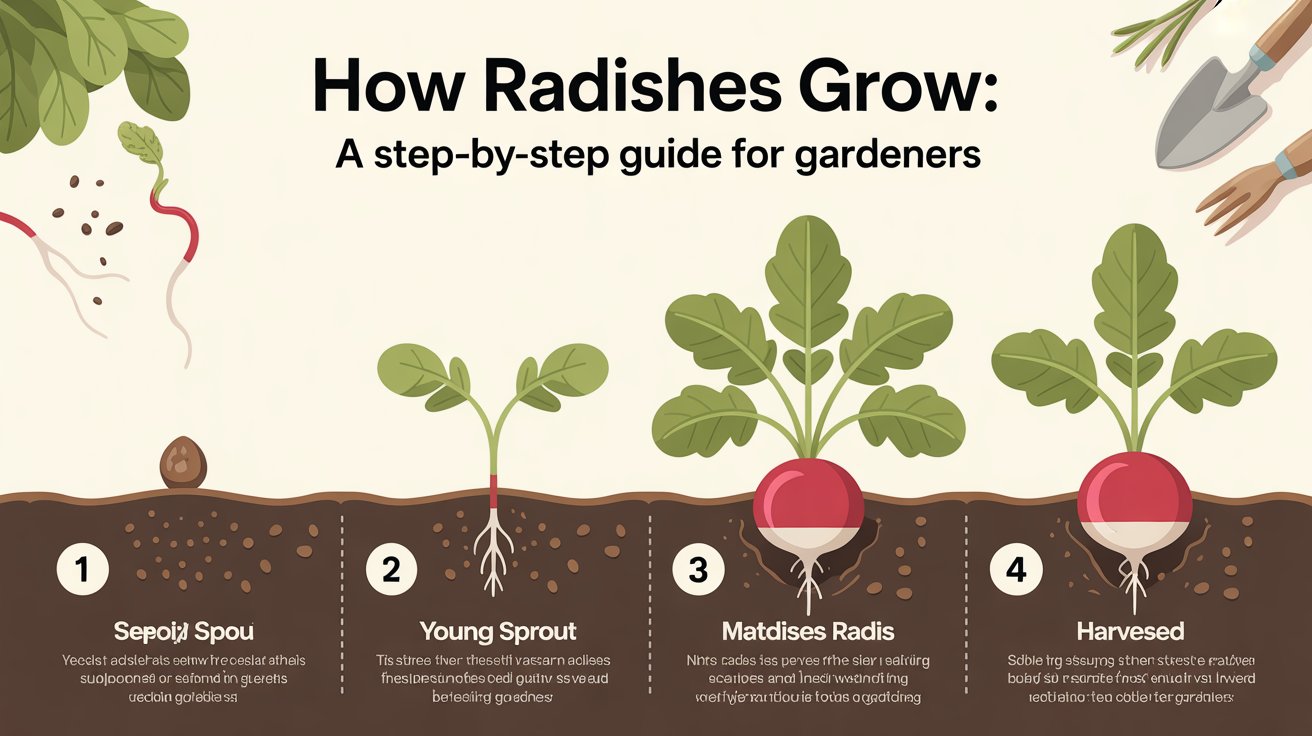
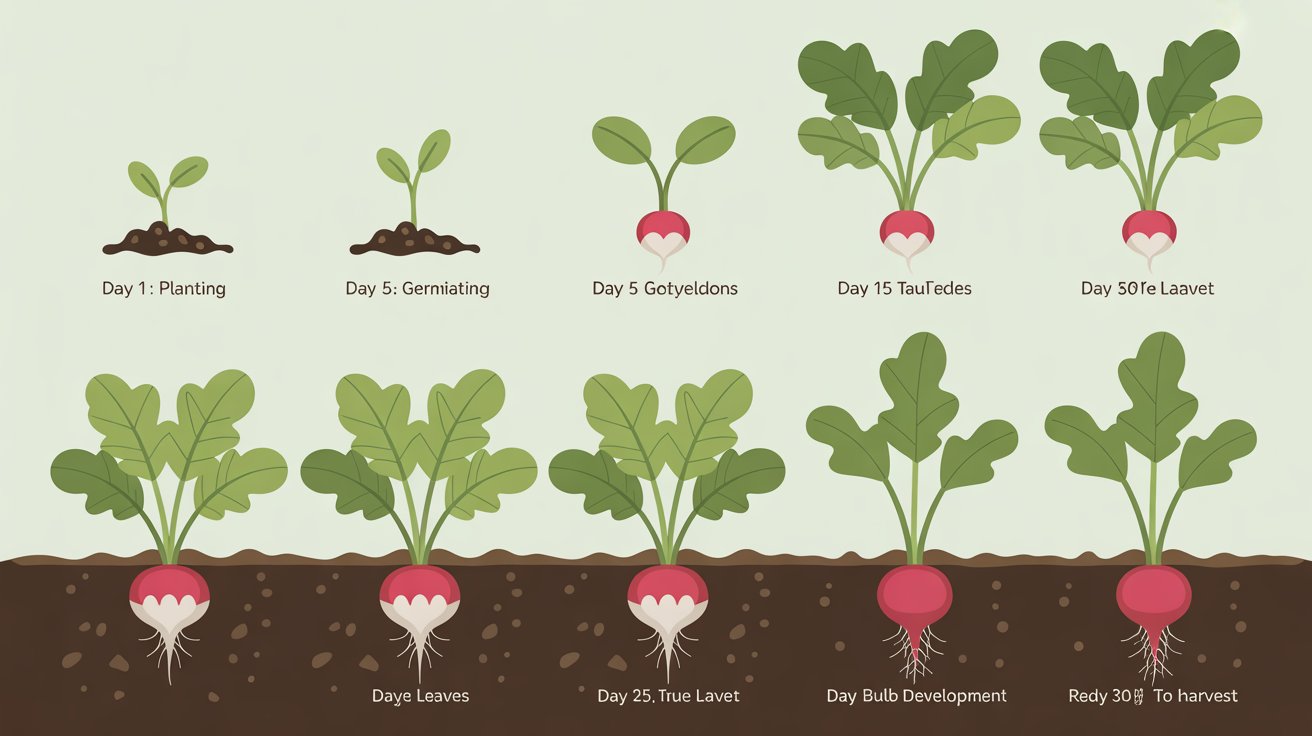
Radishes are ready to harvest within 20 to 30 days after planting. Because they grow quickly, timing is critical. If left in the ground too long, radishes become woody and lose flavor. Therefore, regular inspection is necessary.
To check readiness, the top of the root should be visible above the soil. A diameter of 1 inch usually indicates maturity. Radishes should be pulled gently to avoid breaking the root. If resistance is felt, loosening the soil first is recommended.
Harvesting should be done in the morning when temperatures are cooler. This helps preserve crispness and flavor. After pulling, radishes should be rinsed and dried before storage. Leaves may be removed to extend shelf life.
Step 8: Troubleshooting Common Radish Problems
Although radishes are easy to grow, several issues may arise. One common problem is bolting. This occurs when plants flower prematurely due to heat stress or overcrowding. Bolted radishes produce poor roots and bitter flavor.
Another issue is root splitting. This is caused by inconsistent watering. To prevent it, soil moisture should be kept stable. Cracked roots are still edible but may not store well.
Pest damage is also common. Flea beetles create small holes in leaves while root maggots tunnel into the bulbs. These pests can be managed with row covers and crop rotation. Organic sprays like neem oil may be used if infestations persist.
Misshapen roots often result from compacted soil or poor thinning. Therefore, soil should be loosened and seedlings spaced properly. These steps ensure uniform growth and healthy harvests.
Step 9: Storing and Using Radishes
After harvesting, radishes should be stored in a cool place. Refrigeration is ideal. Roots can be kept in perforated bags to maintain humidity. This prevents drying and extends freshness for up to two weeks.
Leaves should be removed before storage. They draw moisture from the root and cause wilting. However, radish greens are edible and may be used in salads or stir-fries.
Radishes can be eaten raw, pickled or cooked. Their crisp texture makes them ideal for slaws and sandwiches. Daikon radishes are often used in soups and stews. Because of their versatility, radishes are a valuable addition to any kitchen.
FAQ: Radish Growing Guide
Most radishes mature in 20 to 30 days. Fast-growing varieties like Cherry Belle may be ready in 22 days.
Loose, well-drained soil with a pH between 6.0 and 7.0 is ideal. Compost improves texture and fertility.
Yes. Containers allow better control over spacing and drainage. They are perfect for small gardens and balconies.
Bolting occurs due to heat stress or overcrowding. Planting in cool weather and proper thinning helps prevent it.
Use row covers and companion plants like marigolds. Organic sprays and crop rotation also reduce pest pressure.
Compacted soil and poor thinning are common causes. Loosening soil and spacing seedlings properly ensures uniform growth.
Absolutely. Radish greens are nutritious and can be used in salads, soups or stir-fries.
Store in the refrigerator in perforated bags. Remove leaves to prevent moisture loss and extend shelf life.
Final Thoughts: Growing Radishes with Confidence
Radishes are among the most rewarding vegetables to grow. Their fast growth and minimal care requirements make them ideal for beginners and seasoned gardeners alike. By following this step-by-step guide, you can enjoy crisp, flavorful radishes in just a few weeks.
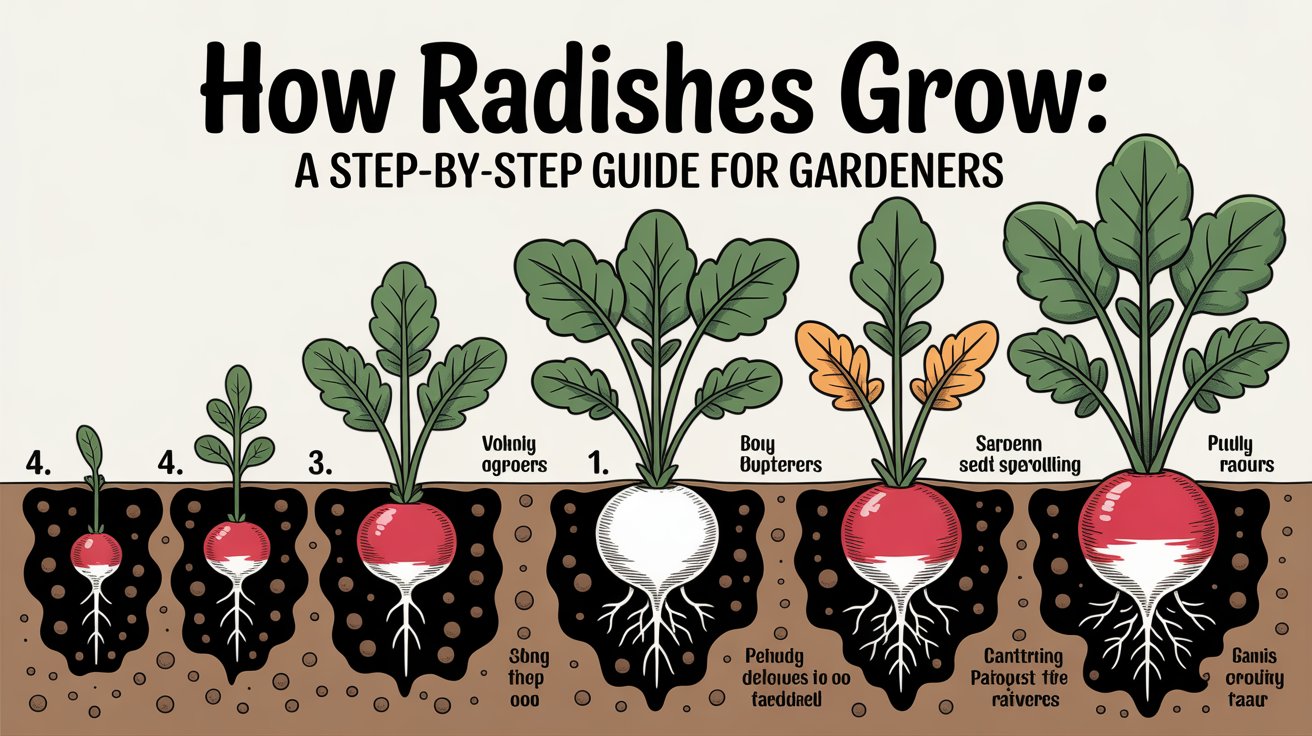
Whether you’re planting in raised beds, containers or traditional rows, understanding each stage of radish growth is essential. From soil preparation to harvesting, every step contributes to a successful crop.
Use this guide to plan your garden, troubleshoot issues and enjoy fresh radishes all season long. With the right approach, your garden will thrive and your harvest will be abundant.




- Be Respectful
- Stay Relevant
- Stay Positive
- True Feedback
- Encourage Discussion
- Avoid Spamming
- No Fake News
- Don't Copy-Paste
- No Personal Attacks
- Be Respectful
- Stay Relevant
- Stay Positive
- True Feedback
- Encourage Discussion
- Avoid Spamming
- No Fake News
- Don't Copy-Paste
- No Personal Attacks
